Curtain guide
How curtain fullness changes the look.
Fullness is the fabric width divided by rod width. More fullness creates deeper folds and a softer look.
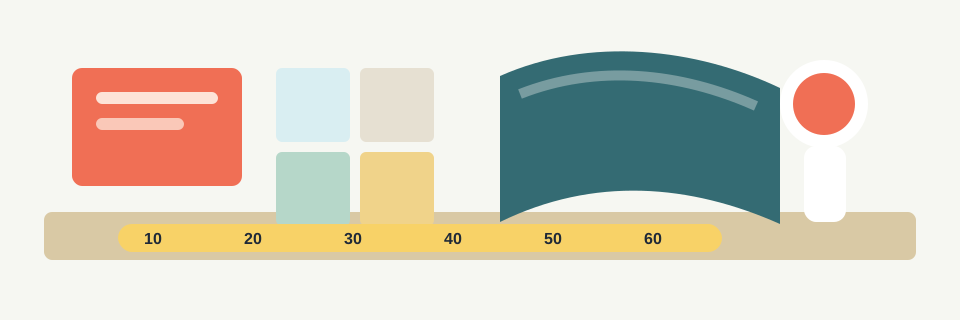
What fullness means
Curtain fullness is the relationship between fabric width and rod width. If the rod is 80 inches wide and the curtain fabric totals 160 inches wide, the fullness is 2x. Fullness creates folds; without it, curtains can look flat and stretched when closed.
Fullness also affects budget. Moving from 1.5x to 2.5x can change the number of panels or yards of fabric required, even when the window size stays the same.
| Fullness | Look | Typical use |
|---|---|---|
| 1.5x | Cleaner, flatter, less gathered. | Small rooms, casual spaces, tight budgets, or heavy fabrics. |
| 2x | Balanced folds without looking too heavy. | Bedrooms, living rooms, and most ready-made panels. |
| 2.5x | Fuller, softer, and more formal. | Decorative panels, lighter fabrics, or rooms where drape matters more than cost. |
Example
Suppose a window is 72 inches wide and the rod extends 8 inches beyond each side. The rod width is 88 inches. At 1.5x fullness, the target fabric width is 132 inches. At 2x, it is 176 inches. At 2.5x, it is 220 inches.
If each ready-made panel is 54 inches wide, the same window may need 3, 4, or 5 panels depending on the fullness target. This is why fullness should be decided before you compare prices.
Measure before buying
- Measure the window or frame width.
- Add side return so open curtains do not block the glass.
- Multiply the rod width by the fullness target.
- Divide by panel width or fabric bolt width.
- Round up, then check pattern repeat, lining, and hem allowance.